Author: Aisling Kelly

  • Annabel’s Reflection

    Throughout the years of my undergraduate degree in Social Anthropology, I have always been aware of a stark divide that has influenced our scholarly curriculum; that between the symbolic and the physical worlds. In my academic journey over the years, it has always felt as though our educational institutions remain tethered to pedagogical frameworks that privilege sight over touch, epitomised by the cautionary refrain: ‘You can look, but you can’t touch.‘ And this becomes applicable to my young childhood experiences visiting museums and exhibitions across Scotland, where I was perpetually positioned as a distant observer, separated from historical artefacts by impenetrable barriers and clinical glass enclosures. 

    And of course, there are obvious rationales that could indicate why young children should not run their hands down the skeleton of a Diplodocus which is millions of years old at the Kelvin Grove Art Gallery. However, in relation to slightly less radical circumstances, I have always wondered what is left unseen in this systematic physical distancing between human subjects and material objects. What essential dimensions of understanding become obscured, suppressed, or entirely lost? How do these institutionalised boundaries of engagement fundamentally alter our epistemological relationship with material culture? 

    Having had the privilege to engage with the Anthropology Teaching Collection over the course of this project, I can conclude that none of the above questions can satisfyingly be answered. The artefacts that we held in the palms of our hands mirror a legacy of dispossession and imperial negligence at this institution of further education and with that emerges a series of forgotten stories and contested pasts that may not ever be recovered. Our experience of object-based learning thus becomes intricately entangled in a complex web of decolonial scholarship, revealing the power dynamics and hierarchies of touch that undergird elite educational institutions. These objects are not neutral; they are charged with unspoken narratives of extraction, appropriation, and systemic erasure -speaking volumes about the violent histories of knowledge production and the continued mechanisms of cultural loss that the University of Edinburgh is accountable for.  

    It can then only be assumed that overwhelming emotions of guilt and disturbance have filtered my learning experience in this way and handling these valuable artefacts has never felt comfortable, has never felt okay. However, in my (still) limited knowledge about the artefacts, touching them has catalysed a connectedness that I have rarely felt over the trajectory of my academic career. And this has been the most poignant learning experince I have witness across this course. I feel as though I have been granted the opportunity to be held responsible for something that falls outside of the jurisdiction of a gradebook; to care

    With this I realise that in our current educational landscape, caring has become a radical act. We’re trained to consume information, to memorise, to perform – but rarely to feel, to connect, to understand deeply. By systematically removing tactile, emotional engagement from our curricula, we’re producing a generation of learners disconnected from the very histories and material worlds that shape our present. Academic engagement across the humanities has become confined to theoretical and scholarly understanding and removed from our human experiences. And this becomes particularly prevalent in relation to the precarious political climate that threatens the world currently. We’re teaching students to observe, but not to feel. To analyse, but not to empathise. To engage but not to act.  

  • Basic Features and Potential Problems in Contemporary and Digital Cataloguing 

    Basic Features and Potential Problems in Contemporary and Digital Cataloguing 

    by Yiyang Wen

    The fundamental reason people want to catalogue and preserve heritage derives from modernists’ anxieties for the loss of the past, while ironically the loss of the past until recently is still the basic feature of the present. This implicates an ideal expectation that catalogue can traverse time and space to record object in its full details. However, this wish fails because nothing can spatiotemporally persist. This tension, to my perspective, endows contemporary cataloguing with three controversial features. 

    First, cataloguing is never neutral because objects are described differently through different times and spaces. As some scholars suggest, object preservations and cataloguing are always under certain socioeconomic environments that implicate dominantly political schema. Cataloguers, even if being told to be “neutral and fair”, can never achieve that idea because they live in this politicised world. For example, previous British cataloguers interpret objects from Maqdala, Ethiopia as “looted treasures” while contemporary ones are more drawing on objects’ provenance and traditional aspects. Here, catalogues from different times have very different explanations about the same collection. 

    Second, cataloguing inherits personal traits from corresponding cataloguers. This is to say, “who to catalogue what?” is a core question embedded in contemporary cataloguing world. An example in digital catalogues can better explain this. While previous cataloguers considered their data as valuable and accessible, later cataloguers who needed to transit all information from physical paperwork to digital database would treat some seemingly redundant labels and descriptions as “dirty data” that should be cut off. This situation is prominent because we can imagine how much data has been manually omitted by certain righteous reasons from cataloguers at that time. 

    Third, cataloguing is a way to dominate rights to access and interpret knowledge. In other words, objects are described by those who are eligible to describe them. This shows a sheer unbalanced power relation between the dominant and the underprivileged. To the best, cataloguers can “collaborate” with indigenous people on object interpretations, while to the worst, cataloguers exert “violence” on object alone that detach it from its ethnographic backgrounds. Watkins and the Black Bottom Archive did a great job in “collaboration”, in that they engaged with Black Detroit Community and tried to explore personal histories that were related to their archival objects. 

    In addition to these three basic features and corresponding problems, the rise of digital cataloguing also brings two difficulties. For one, for the sake of fast searching database, digital catalogue is seemingly monopolising knowledge, especially those key words from only cataloguer sides to describe objects; for another, the transition from physical documents to digital catalogues inconveniently requires cataloguers to have professions in both areas, because they need to understand why some information is important while others are not. 

    Reference 

    Arizpe, L. and Amescua, C. (eds) (2013) Anthropological Perspectives on Intangible Cultural Heritage. Heidelberg: Springer International Publishing (SpringerBriefs in Environment, Security, Development and Peace). Available at: https://doi.org/10.1007/978-3-319-00855-4. 

    Brulon Soares, B. and Witcomb, A. (2022) ‘Editorial: Towards Decolonisation’, Museum International, 74(3–4), p. 1. Available at: https://doi.org/10.1080/13500775.2022.2234187. 

    Prosper, S. (2024) ‘A failure of care: unsettling traditional archival practices’, in C. Krmpotich and A. Stevenson (eds) Collections Management as Critical Museum Practice. UCL Press, pp. 35–48. Available at: https://doi.org/10.2307/jj.19551243.7. 

    Turner, H. (2020) ‘Object, Specimen, Data: Computerization and the Legacy of Dirty Data’, in Cataloguing Culture. University of British Columbia Press, pp. 157–183. Available at: https://doi.org/10.59962/9780774863940-009. 

  • Suwau Headdress

    Suwau Headdress

    Dimensions:   45cm x 6cm  

    Materials:   

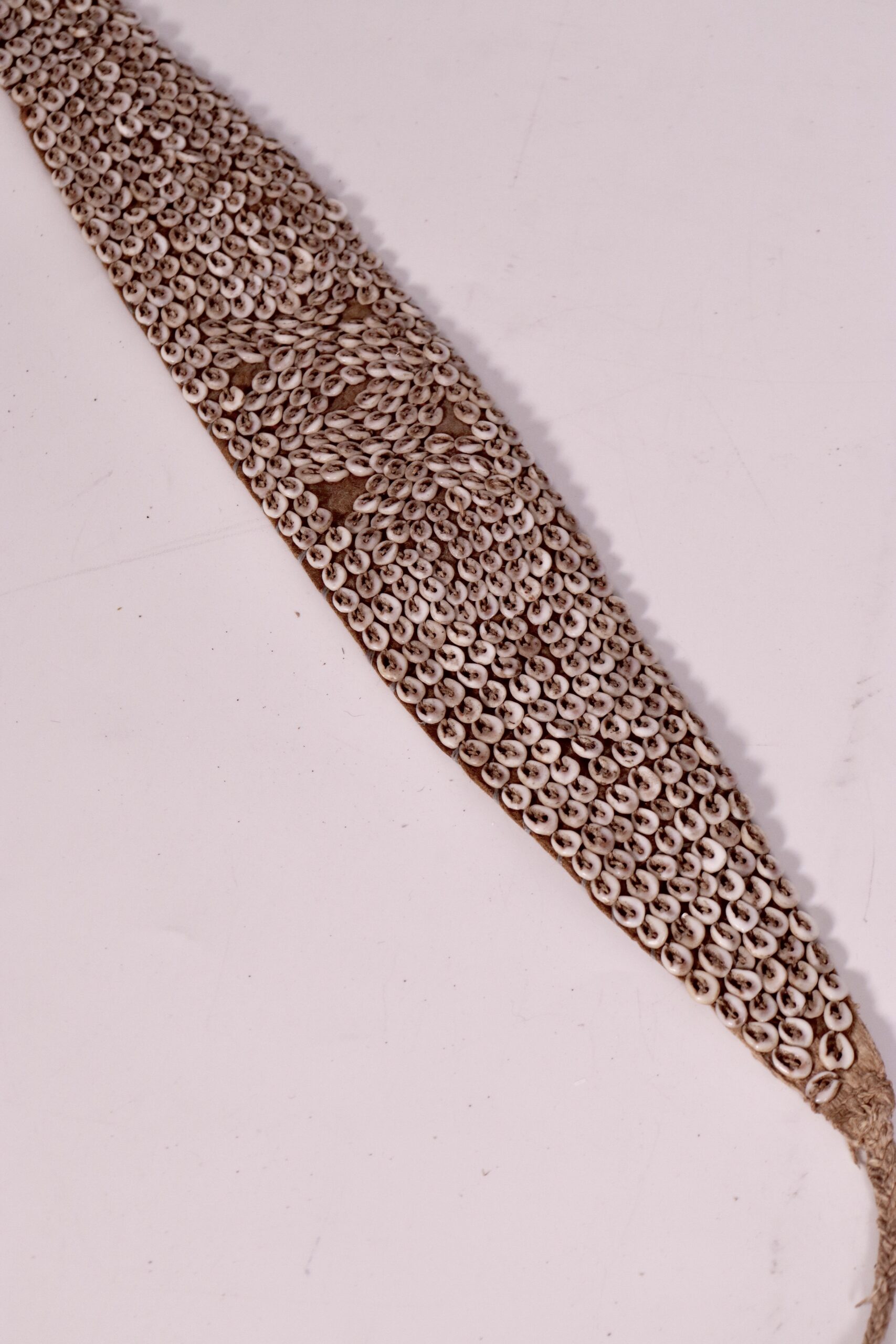
    Shell rings (takei), embroidery string (pirik), fibrous sheet (potentially made of barkcloth or coconut palm tissue) and rattan cords  

    Production Methods and Techniques: Unknown, but likely embroidery techniques.   

    Condition:  Good.  


    Description:  

    Headdress made from fibrous sheet that is embroidered with shell rings, with circular patterns in the centre and tapered ends. A cord is attached to either side of the sheet, which presumably is used to tie to head. This item was previously catalogued as a belt but we believe it is more likely to be a headdress.  

    This vibrant ceremonial textile, woven with intricate embroidery, comes from Southeast Asia. The fabric is decorated with bright colors, geometric patterns, and symbolic motifs, often representing spiritual or social themes.

    Significance:

    Ceremonial textiles serve both functional and symbolic purposes, used in celebrations, rituals, and as markers of social status or cultural identity.

    Function: 

    In Puang communities, suwau is part of the bride-wealth and used in land buying or exchanged in peace-making rituals, post warfare.  


    Provenance   

    Name of Creator:   Unknown  

    Where the item was created/made: Likely Papua New Guinea.  

    Date Made:  Unknown  

    Acquisition:  

    Unknown, but these objects were potentially acquired by Professor Hooshang Philsooph during his ethnographic research in Puang, West Sepik, Papua New Guinea and donated to the University of Edinburgh’s Social Anthropology Teaching Collection by him, where the Social Anthropology Department now has ownership. 

    Acquisition date:  

    Unknown, but potentially acquired between 1971-1973 during Professor Hooshang Philsooph’s fieldwork.  

    Current Location:  Chrystal Macmillan Building in storage.  


    General Notes

    Sources:  

    Philosooph, H. (1980) A Study of a West Sepik People, New Guinea, with special reference to their system of beliefs, kinship and marriage, and principles of thought. PhD thesis. University of Edinburgh.  

    Other Associations:  

    There is a likely association with object SA01.  

    Name of Cataloguers:  

    Astrid Everall, Ariela Silber and Yiyang Wen  

    Date:  12/03/2025  

    Acquisition Number: SA04

  • Fibrous sheet with shells and tusk

    Fibrous sheet with shells and tusk

    Title: Unknown  

    Item Type: Fibrous sheet with shells and tusk 

    Key Words:  Puang, Papua New Guinea, shells, Hooshang Philsooph 

    Description:  

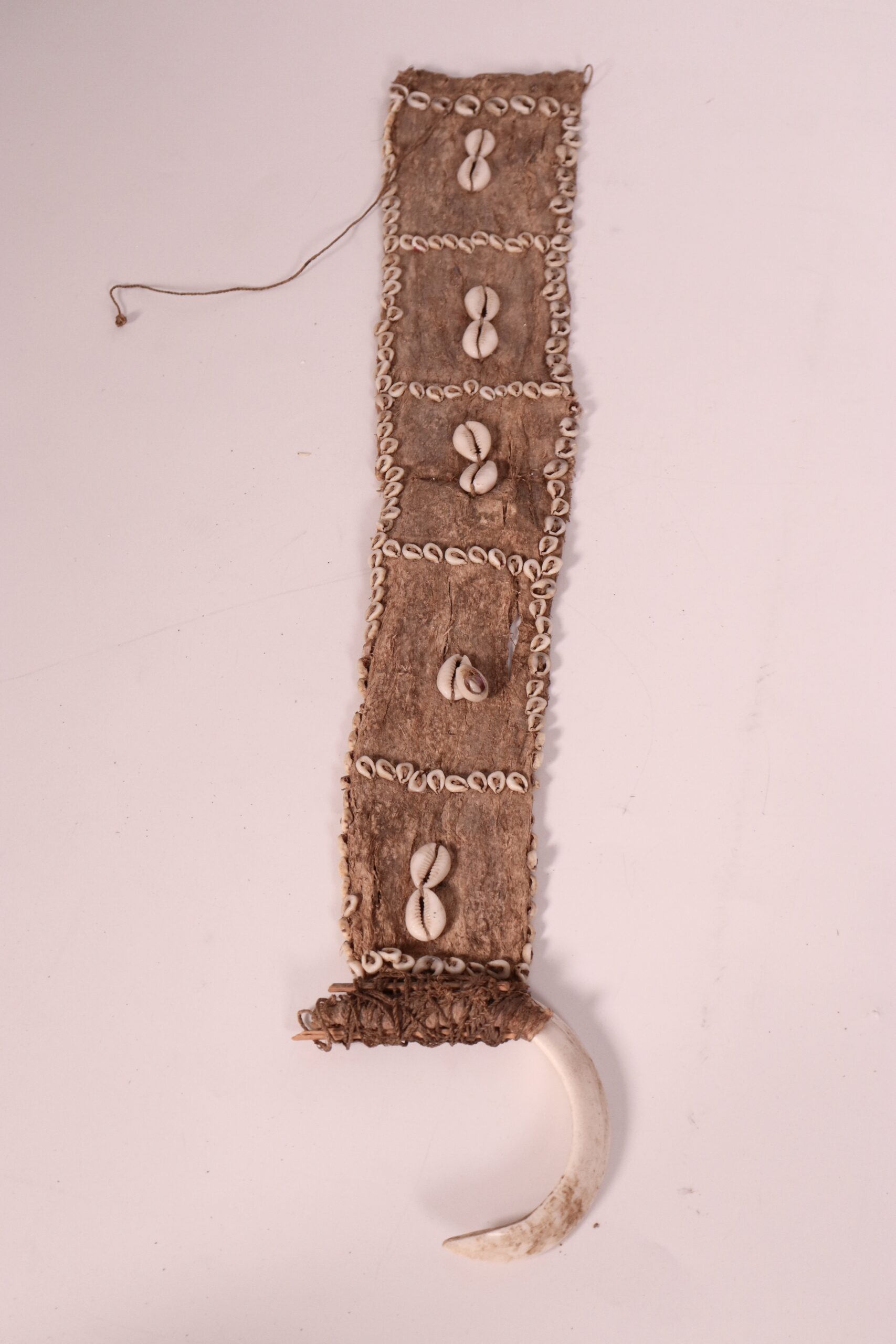
    Rectangular fibrous sheet embrodiered with shell rings around the edges and in a square pattern. There are two whole cowrie shells in the centre of each square. At one end of the sheet, a curved tusk is attached with string. The back of the sheet is dyed with red and black pigment in a pattern.    

    Function:  

    Unknown, but it could possibly be used as a belt or a hanging ornament.   

    Dimensions:   45cm x 9cm  

    Materials:   

    Shell rings (takei), whole cowrie shells, embroidery string (pirik), fibrous sheet (potentially made of bark or coconut palm tissue), red and black pigment, tusk 

    Production Methods and Techniques:

    Unknown, but likely embroidery techniques.  

    Condition:  

    Poor/damaged. There are visible signs of wear to the object and some small tears.  


    Provenance

    Name of Creator:   Unknown  

    Where the Item was created/made:  Likely Papua New Guinea.  

    Date Made:  Unknown  

    Acquisition:  

    Unknown, but these objects were potentially acquired by Professor Hooshang Philsooph during his ethnographic research in Puang, West Sepik, Papua New Guinea and donated to the University of Edinburgh’s Social Anthropology Teaching Collection by him, where the Social Anthropology Department now has ownership. 

    Acquisition Date:  

    Unknown, but potentially acquired between 1971-1973 during Professor Hooshang Philsooph’s fieldwork.  

    Current Location:  

    Chrystal Macmillan Building in storage.  


    General Notes 

    Sources:  

    Philosooph, H. (1980) A Study of a West Sepik People, New Guinea, with special reference to their system of beliefs, kinship and marriage, and principles of thought. PhD thesis. University of Edinburgh.  

    Other associations: There is a likely association with object SA04.   

    Name of Cataloguer:   Astrid Everall and Ariela Silber  

    Date:  12/03/2025  

    Assession Number: SA 01

  • Yayrapen Arrows

    Yayrapen Arrows

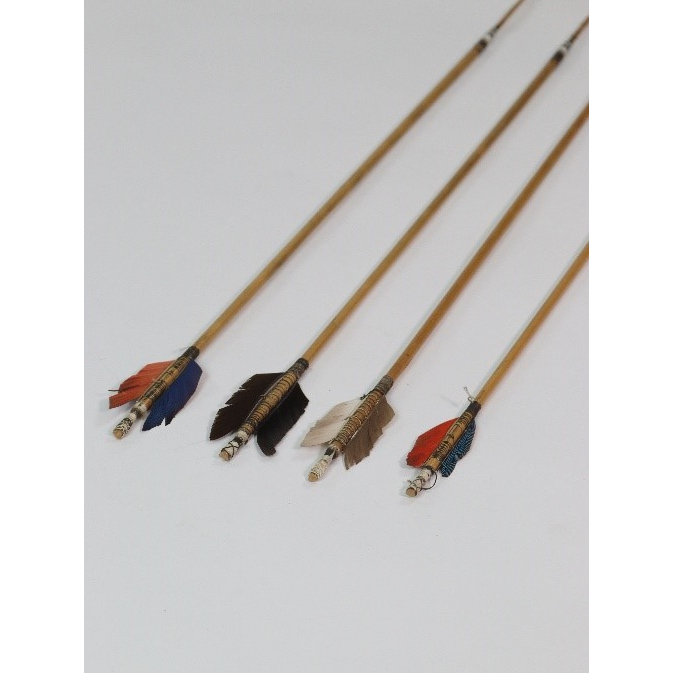
    four arrows flat on display
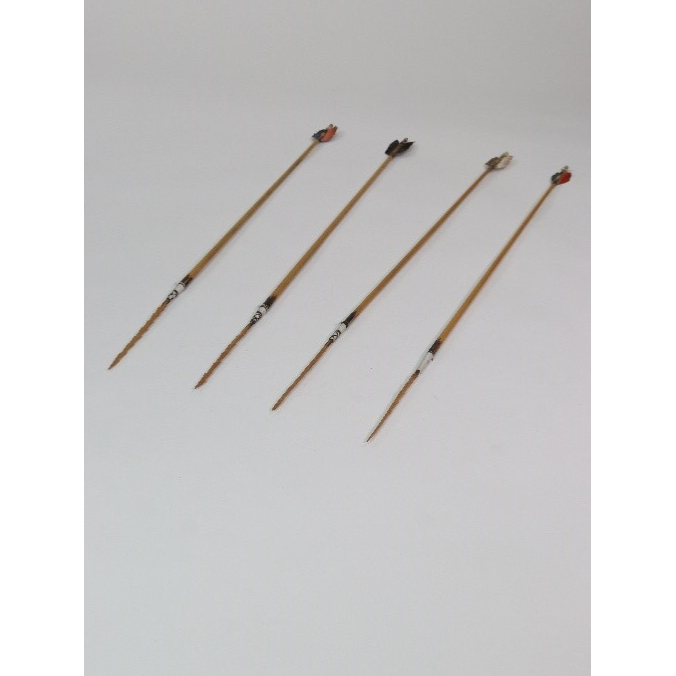
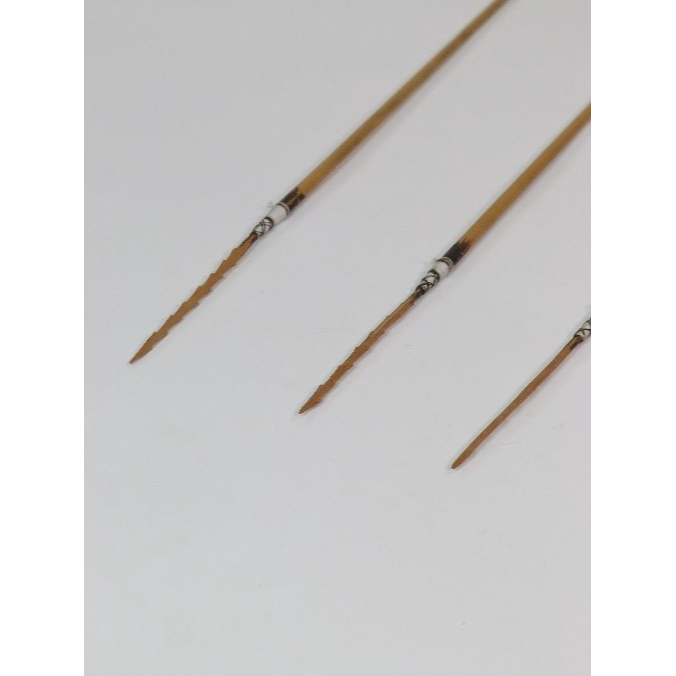
    close up of arrow spears

    Title: Yayrapen  

    Item Type: Arrows  

    Key Words:  Yayrapen, Puang, Papua New Guinea, arrows, wood, Hooshang Philsooph, weaponry  

    Dimensions: 97cm x 0.75cm 

    Materials:   Wood (likely betel nut), feathers (either lory, cockatoo or parrot), breadfruit tree saps, bamboo ashes, paint (made from Hapin)  

    Production Methods and Techniques:   Unknown, but likely carving and cord plaiting processes were used.   

    Condition:  Good


    Description

    Four barbed betel nut wood-made arrows with multi-coloured feathers (these objects were previously categorised as spears but after research was undertaken, we have since distinguished them as arrows). These Yayrapen have barbed arrowheads with sharpened tips. Black and white threads and black paint decorate and secure the arrow hafting. The arrow shafts are a light brown wood, straight and smooth to touch. The fletchling are made with multi-coloured feathers fastened by black and white twine threads (two are red and blue, one is dark brown and one is beige and light brown). Black and white threats plait around the nock of the arrow, displaying visible arrow dents.  

    Function:  

    Yayrapen is a type of arrow mainly used by the Puang people from Papua New Guinea. They are used to injure or possibly kill men, and to hunt pigs and cassowaries. The shapes and uses of these arrows are related to Puang people’s ‘destructive magic’: to diminish or hurt enemies’ souls, indigenous magicians will make different ‘magical bundles’ that resemble these arrows to curse their counterparts. This relates to a basic perspective in Puang warfare that drawing enemies’ blood can sometimes be more important that killing the enemy, as personal belongings (or blood) can be used in ‘destructive magic’ to harm their souls. It is notable that the term Yayrapen is not the overall name for all Puang magical arrows, but only refers to one kind of arrow, amidst other Puang weaponry used for purposes of ‘destructive magic’.       


    Provenance

    Name of creator: Unknown  

    Where was the Item created/made: Unknown, but likely Papua New Guinea.  

    Date Made: Unknown  

    Acquisition:  

    Unknown, but these objects were potentially acquired by Professor Hooshang Philsooph during his ethnographic research in Puang, West Sepik, Papua New Guinea and donated to the University of Edinburgh’s Social Anthropology Teaching Collection by him, where the Social Anthropology Department now has ownership. 

    Acquisition Date:  

    Unknown, but potentially acquired between 1971-1973 during Professor Hooshang Philsooph’s fieldwork.  

    Current Location:  5th floor of Chrystal MacMillan Building on display.  


    General Notes   

    Sources:  

    Philosooph, H. (1980) A Study of a West Sepik People, New Guinea, with special reference to their system of beliefs, kinship and marriage, and principles of thought. PhD thesis. University of Edinburgh.  

    Name of Cataloguer:  Yiyang Wen 

    DATE:  07/03/2025  

    Assession Number: SA052.1-52.4

  • Adze blade 

    Adze blade 

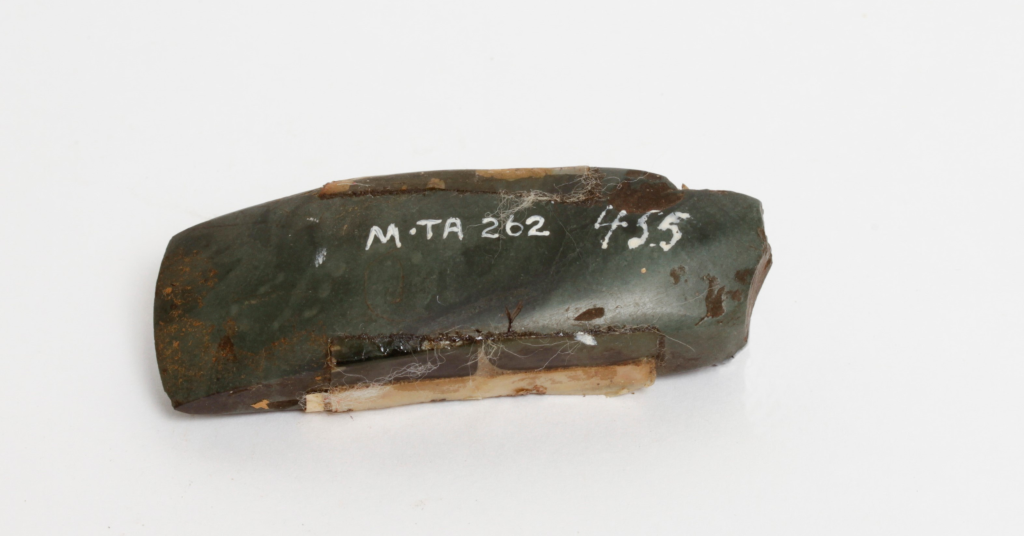
    greenstone blade with small white text

    Title: Adze blade  

    Item Type: Ceremonial axe  

    Key Words:  Adze, greenstone, blade, Massim, Papua New Guinea, weaponry  

    Dimensions: 9cm x 18cm   

    Materials: Chloromelanite stone 

    Condition: Fair. The blade has several scratches and dents around its rim.  


    Description:

    A carved green stone. This stone is likely to be the blade of a ceremonial axe, an adze blade, from the Massim regions of Papua New Guinea. The axe blade is inserted into a wooden handle that is shaped like a slightly tilted 7 and fastened into the handle by wrapped fibres that hold the blade in place.  

    Function:  

    As a prestige item, adze blades were carried or worn in the belt for adornment on special occasions such as sing-sing and moka exchanges. Due to the risk of breaking the thin blade, they were only used for cutting off fingers as a sign of grief and sometimes in close combat. They were also used as money to buy other commodities, such as salt, body oil, shells and brides. The axes were used ceremonially as ‘strength-giving ornaments’ in the ceremonial dances during the Konggol. The wooden handles that hold the stone are only temporary supports for the blade, carved especially to carry and display the stone during exchange ceremonies. Once it has been inserted in the haft, the stone blade is marked for presentation and exchanged, after which the handle is often discarded until the next exchange cycle demands that a new one be carved. 

    Indigenous Massim people would use stone axes and tools until colonists from Australia introduced steel tool in the mid-20th century, however, it is suggested that the polished axe stones maintained their value as ceremonial valuables that were traded between communities. The axes that are created today are identical to those made in the past, except that most of the stone used now is softer and more fragile as it is easier and quicker to work with.  

    Production Methods and Techniques:   

    It is suggested that these stones were quarried from a cave in the volcanic regions of the Massim Islands in Papua New Guinea. Cracks are produced in the solid rock, partly by hammering it with wooden billets and partly by alternately heating it with fire and pouring cold water on it. Next, wedges were forced into the cracks and blocks broken free. Archaeological evidence points to a long-extinct greenstone tool industry centered around the quarry of the Suloga hills in Muyuw (Woodlark Island).  


    Provenance

    Name of Creator: Unknown  

    Where the Item was created/made: 

    Likely the Southern Isles of Papua New Guinea   

    Date Made: Unknown  

    Acquisition:  

    Unknown, but it was likely obtained by a PhD student of a member of staff at the University of Edinburgh during fieldwork and was then donated to the University of Edinburgh’s Social Anthropology Teaching Collection, where the Social Anthropology Department now has ownership. The nature of the acquisition is unknown.  

    Acquisition Date: Unknown  

    Current Location: 5th floor of Chrystal MacMillan Building on display. 


    General Notes

    Name of Cataloguer:  Annabel Macdonald  

    Date:  05/03/2025  

    Assession Number: SA049

  • Woven Rattle

    Woven Rattle

    Title: Unknown  

    Item Type: Rattle  

    Key Words:  Rattle, grass, musical instrument, Bamileke, Cameroon 

    Description:  

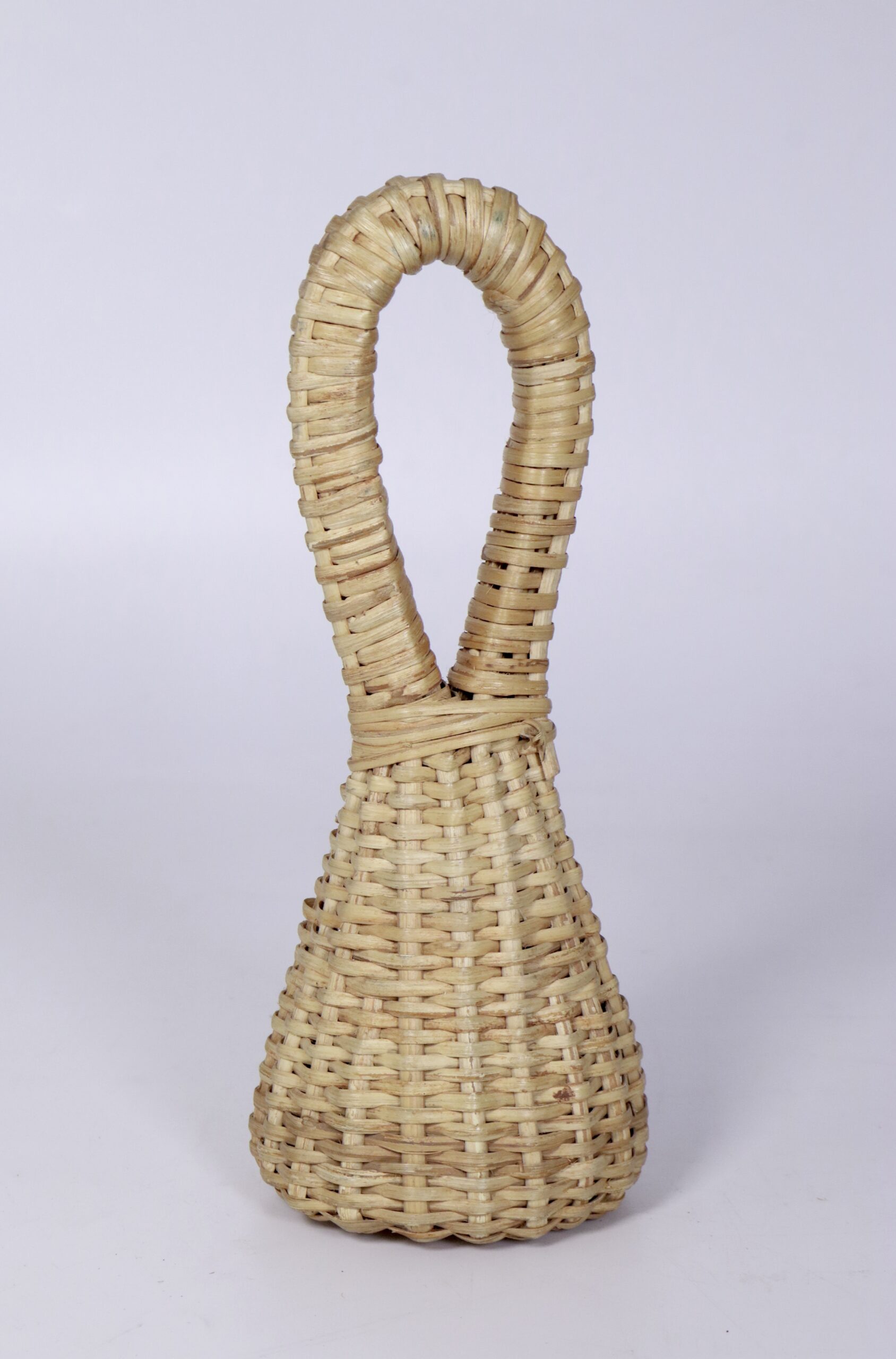
    Woven grass rattle with a thick woven handle, string fortification at the base and a hollow, rounded head. The head of the rattle likely contains encased stones or seed that produces the musical sound.  

    Function:  Musical instrument  

    Dimensions:  23cm x 8.5cm  

    Materials: Grass, string, likely stones or seeds 

    Production Methods and Techniques:   Unknown  

    Condition:  Good.  


    Provenance

    Name of creator:   

    Unknown, but it could potentially be associated with the Bamileke people due to labels from the Anthropology Teaching Collection.   

    Where the item was created/made:

    Unknown, but it could potentially be associated with the Cameroon grasslands region due to labels from the Anthropology Teaching Collection.  

    Date made:  Unknown  

    Acquisition:  

    Unknown, but it was likely obtained by a PhD student of a member of staff at the University of Edinburgh during fieldwork and was then donated to the University of Edinburgh’s Social Anthropology Teaching Collection, where the Social Anthropology Department now has ownership. The nature of the acquisition is unknown.   

    Acquisition Date: Unknown, but likely pre-1980s. 

    Current Location: Chrystal Macmillan Building in storage.  


    General Notes  

    Sources:  

    Schrag, B.E. (2005) How Bamiléké music-makers create culture in Cameroon. PhD thesis. University of California.  

    Other Associations:

    There is a potential link to object SA040 and SA044 in the collection, as they could be from the same region and used in similar dances and performances, but this needs further researching.  

    Name of Cataloguer: Astrid Everall  

    Date:  09/03/2025  

  • Pattern Woven Rattle 

    Pattern Woven Rattle 

    Title: Unknown  

    Item Type: Rattle  

    Key Words:  Rattle, grass, musical instrument, Bamileke, Cameroon  

    Description: 

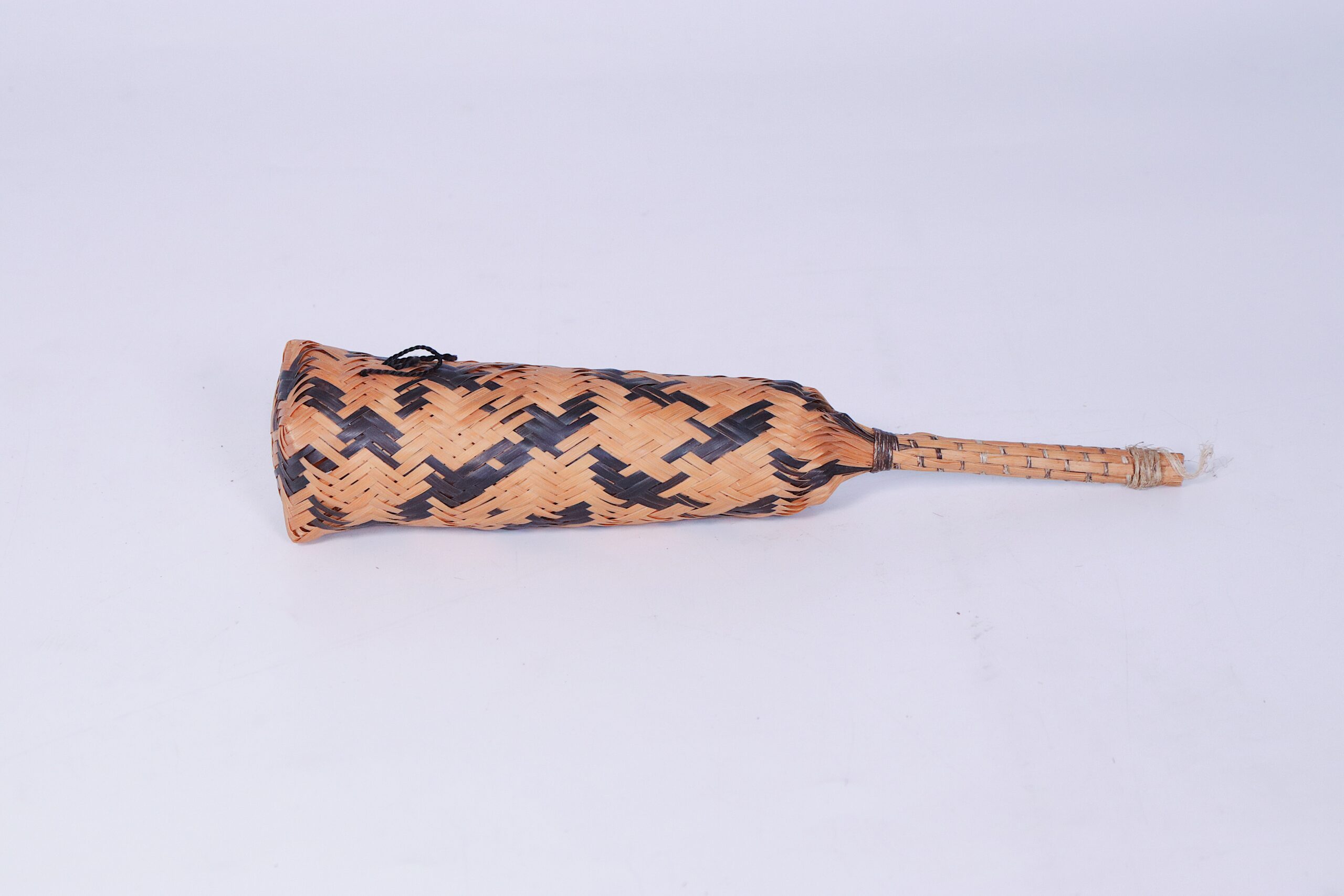
    A brown and black plaited grass rattle with a long, thin handle and an oblong hollow head. The head of the rattle likely contains encased stones or seed that produces the musical sound.  

    Function:  Musical instrument 

    Dimensions:  23cm x 4cm  

    Materials:   Grass, string, likely seeds or stones 

    Production Methods and Techniques:   Unknown  

    Condition:  Good.  


    Provenance

    Name of creator:   

    Unknown, but it could potentially be associated with the Bamileke people due to labels from the Anthropology Teaching Collection.   

    Where the item was created/made:

    Unknown, but it could potentially be associated with the Cameroon grasslands region due to labels from the Anthropology Teaching Collection.  

    Date made: Unknown  

    Acquisition:

    Unknown, but it was likely obtained by a PhD student of a member of staff at the University of Edinburgh during fieldwork and was then donated to the University of Edinburgh’s Social Anthropology Teaching Collection, where the Social Anthropology Department now has ownership. The nature of the acquisition is unknown.   

    Acquisition Date:

    Unknown, but likely pre-1980s.   

    Current Location: Chrystal Macmillan Building in storage.  


    General Notes   

    Sources:

    Schrag, B.E. (2005) How Bamiléké music-makers create culture in Cameroon. PhD thesis. University of California.   

    Other Associations:

    There is a potential link to object SA040 and SA045 in the collection, as they could be from the same region and used in similar dances and performances but this needs further researching.  

    Name of cataloguer: Astrid Everall  

    Date:  09/03/2025  

    Assession Number: A044

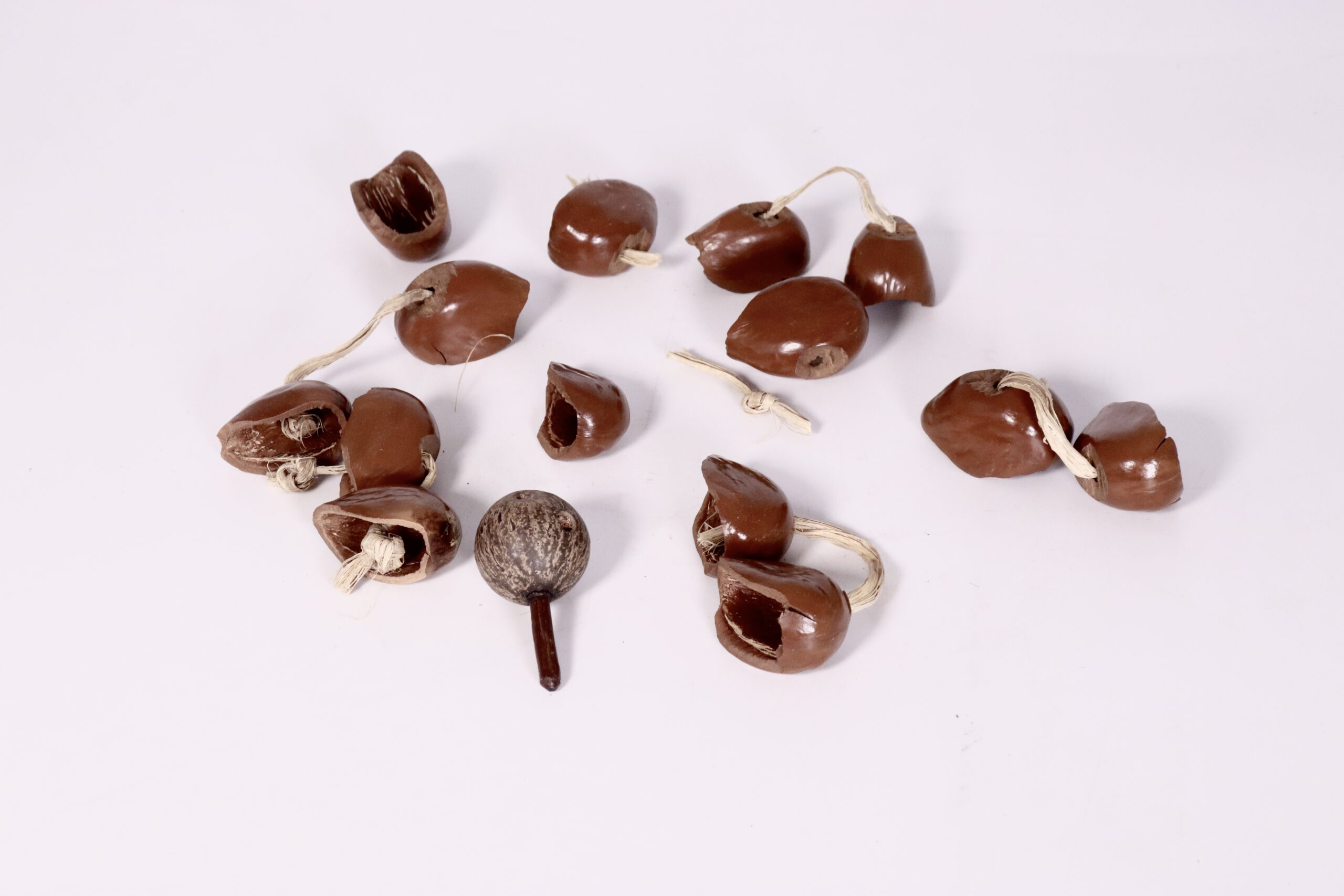
  • Seed Pods

    Seed Pods

    Title: Unknown  

    Item Type: Seed pods  

    Key Words: Rattle, seed pods, musical instrument  

    Function: These seed pods likely make up part of a seed nut rattle.  

    Dimensions: Each pod is 4.5cm x 2.5cm 

    Materials:   Seed pods, twine 

    Production Methods and Techniques: Unknown  

    Condition:  Fair. The string connecting two of the seed pod pairs have broken.  


    Provenance

    Name of creator:  Unknown  

    Where the item was created/made: Unknown  

    Date made: Unknown  

    Acquisition:

    Unknown, but it was likely obtained by a PhD student of a member of staff at the University of Edinburgh during fieldwork and was then donated to the University of Edinburgh’s Social Anthropology Teaching Collection, where the Social Anthropology Department now has ownership. The nature of the acquisition is unknown.   

    Acquisition Date:Unknown, but likely pre-1980s.   

    Current Location: 5th floor of Chrystal MacMillan Building on display. 


    General Notes

    Other Associations:

    There is a likely link to object SA041 in the collection, forming a whole rattle.   

    Name of Cataloguer: Astrid Everall  

    Date:09/03/2025  

    Accession Number: SA014  

  • Zahra’s reflection

    Zahra’s reflection

    By Zahra Abdalla  

    My first essay for the Anthropology in Practice course was centered on using the stolen jewels of Queen Amanishaketo as a case study into the role of Western museums in perpetuating and sustaining colonial violence, discussing the agency and afterlife of objects. Drawing on post-colonial theories like Ngūgī wa Thiong’o’s (1986) idea of the ‘cultural bomb’ as an imperial tool obliterating people’s belief in their heritage (amongst many other things) and the Fanonian principle that violence orders the colonial world destroying multiple aspects of life for the colonized (Fanon,1963); I saw that the presence of Amanishaketo’s jewels in Western museums given the colonial history of Sudan built on Classen and Howes’ argument that ‘Collecting is a form of conquest and collected artifacts are material signs of victory over their former owners and places of origin.’(2006,209).

    The presence of Kushite artifacts within Ancient Egyptian museums in the museum space reflected and sustained a wider narrative and hierarchy relating to African artefacts, and diminished the cultural value ascribed to the jewels of Amanishaketo and the wider character of the Kushite queen (Kandaka) in contemporary Sudanese society, and the repercussions of the treatment of these objects in Western museums, directly affecting their agency and afterlife. However, acknowledging the current political situation in Sudan, I recognised that the path to repatriation was less straightforward, and this project working with the Social Anthropology Teaching Collection revealed the nuances and subtleties in the ongoing conversations surrounding repatriation.

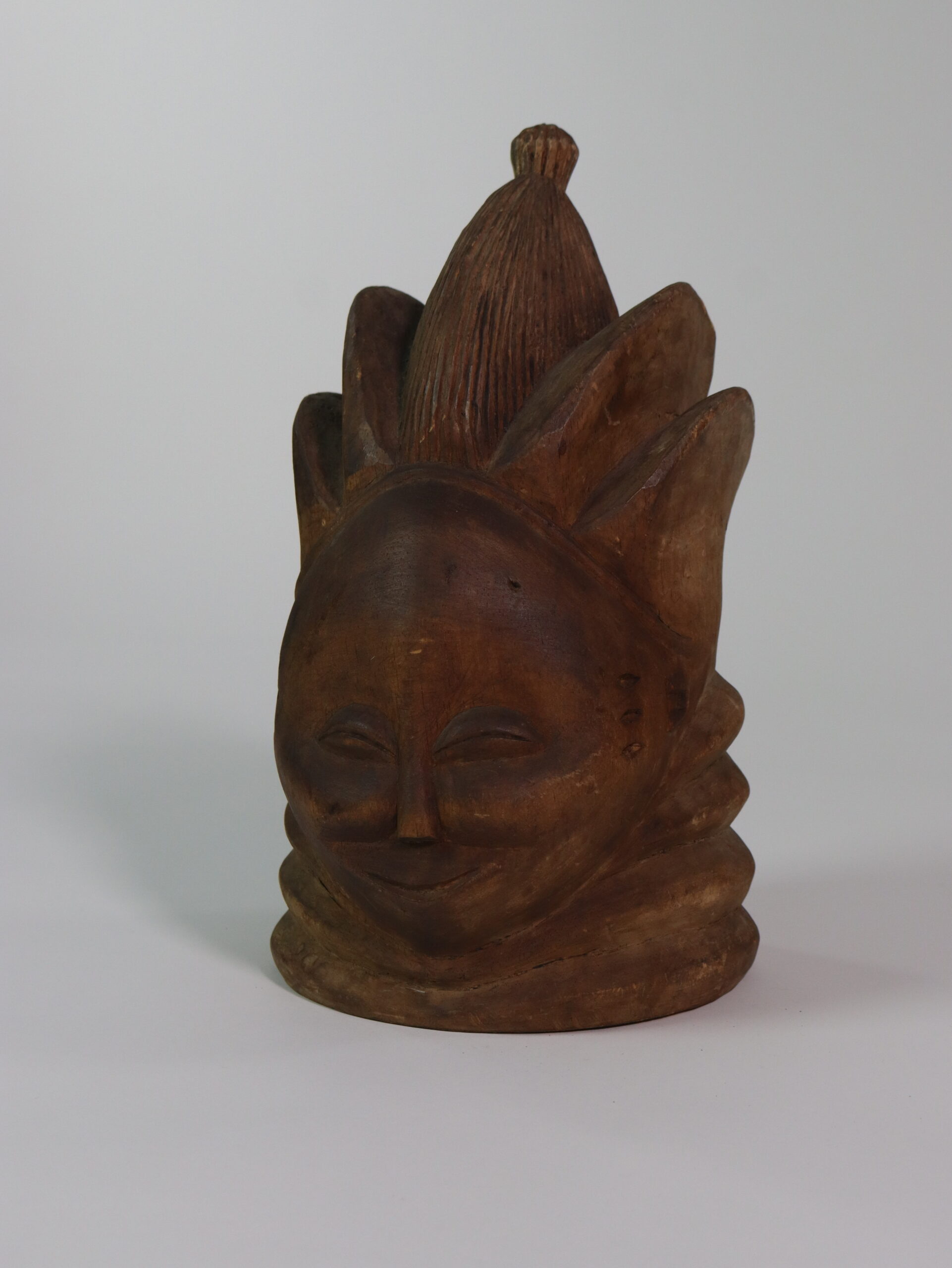
    Working with the Sierra Leonean Sowei masks in the Collection unearthed the complexities of repatriation, given the difficulties of provenance work. I began to understand these complexities more wholly though Paul Basu’s work on Sierra Leonean collections in the museumscape, considering ‘flows of cultural capital, the question is whether such collections might play a more valuable role in Sierra Leone’s postconflict rehabilitation from their diasporic locations than if they were simply returned.’(2011,29).

    Reflecting on the questions I had about repatriation in my own work after being exposed to more research and working closely with the Sowei masks in the Social Anthropology Teaching Collection I find that it is equally important to foreground preceding or alternate routes to repatriation. In no way do I wish to diminish the importance of repatriation or the acknowledgement of the unequal power relations which come to explain the overwhelming presence of non-Western objects in Western museum spaces or university collections like this one, I simply argue that it is of equal value to draw on the complexities of repatriation as valuable teaching moments. I believe that there is an opportunity to learn from the previous injustices within the field which birth these collections and there is value in the difficult conversations which arise surrounding them.  

    further reading:  

     Basu, Paul. “OBJECT DIASPORAS, RESOURCING COMMUNITIES: Sierra Leonean Collections in the Global Museumscape: OBJECT DIASPORAS, RESOURCING COMMUNITIES.” Museum Anthropology 34, no. 1 (2011): 28–42.  

    Classen, Constance, and David Howes. “The Museum as Sensescape: Western Sensibilities and Indigenous Artifacts.” In Sensible Objects: Colonialism, Museums and Material Culture, edited by Elizabeth Edwards,Chris Gosden and Ruth B. Phillips,199–222. London: Bloomsbury Academic, 2006. http://dx.doi.org/10.5040/9781474215466.ch-007.  

    Fanon, Frantz. Concerning Violence. in The Wretched of the Earth:Preface by Jean-Paul Sartre ; Translated by Constance Farrington. Edited by Constance Farrington, 35-95 .New York: Grove Press, 1963.  wa Thiong’o, Ngugi. Decolonising the Mind: The Politics of Language in African Literature. Melton: Boydell & Brewer, Limited, 1986.   

This website uses Google Analytics to gather usage statistics. Please accept or reject.

Cookie preferences