By Zahra Abdalla
My first essay for the Anthropology in Practice course was centered on using the stolen jewels of Queen Amanishaketo as a case study into the role of Western museums in perpetuating and sustaining colonial violence, discussing the agency and afterlife of objects. Drawing on post-colonial theories like Ngūgī wa Thiong’o’s (1986) idea of the ‘cultural bomb’ as an imperial tool obliterating people’s belief in their heritage (amongst many other things) and the Fanonian principle that violence orders the colonial world destroying multiple aspects of life for the colonized (Fanon,1963); I saw that the presence of Amanishaketo’s jewels in Western museums given the colonial history of Sudan built on Classen and Howes’ argument that ‘Collecting is a form of conquest and collected artifacts are material signs of victory over their former owners and places of origin.’(2006,209).
The presence of Kushite artifacts within Ancient Egyptian museums in the museum space reflected and sustained a wider narrative and hierarchy relating to African artefacts, and diminished the cultural value ascribed to the jewels of Amanishaketo and the wider character of the Kushite queen (Kandaka) in contemporary Sudanese society, and the repercussions of the treatment of these objects in Western museums, directly affecting their agency and afterlife. However, acknowledging the current political situation in Sudan, I recognised that the path to repatriation was less straightforward, and this project working with the Social Anthropology Teaching Collection revealed the nuances and subtleties in the ongoing conversations surrounding repatriation.
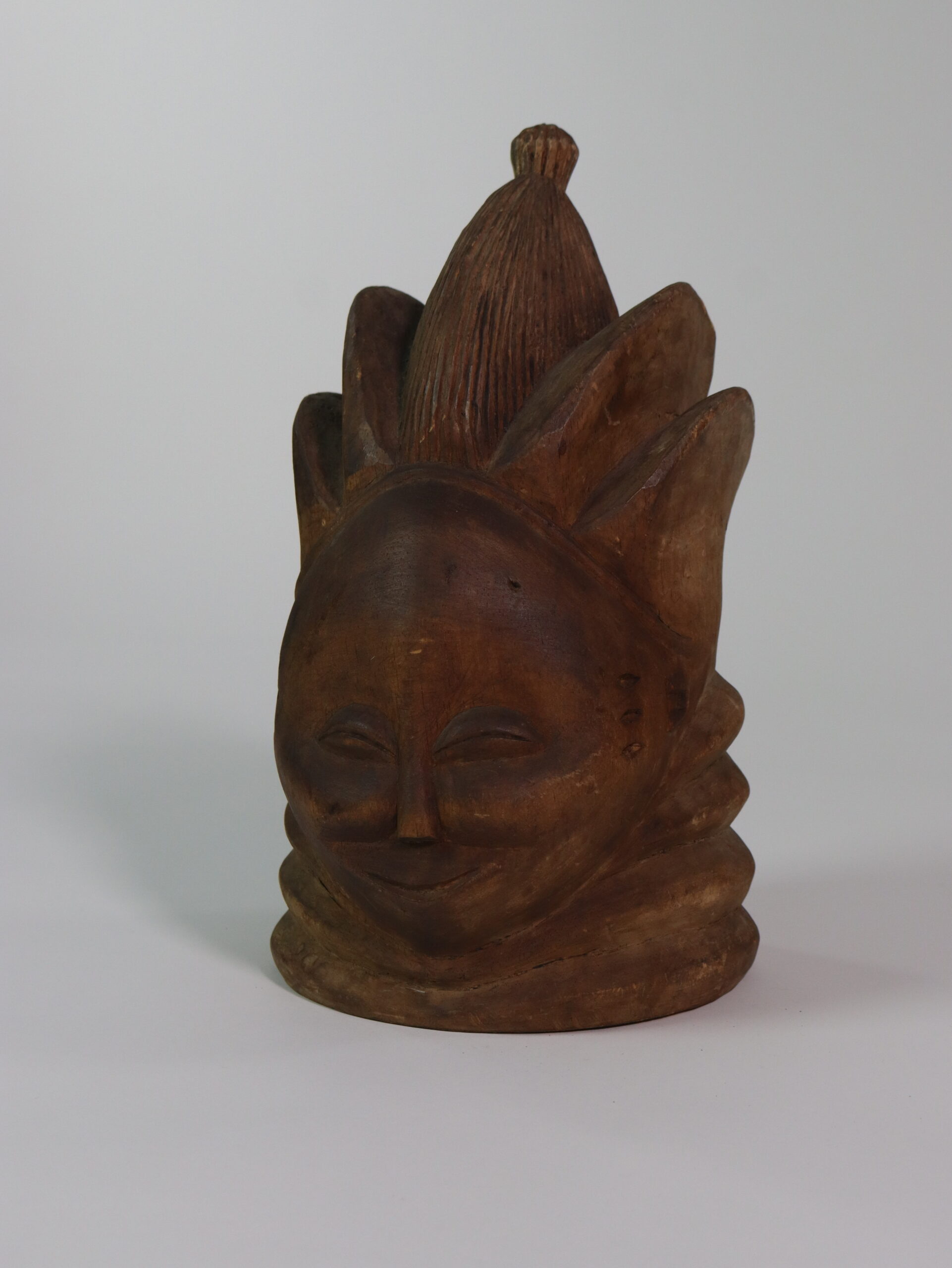
Working with the Sierra Leonean Sowei masks in the Collection unearthed the complexities of repatriation, given the difficulties of provenance work. I began to understand these complexities more wholly though Paul Basu’s work on Sierra Leonean collections in the museumscape, considering ‘flows of cultural capital, the question is whether such collections might play a more valuable role in Sierra Leone’s postconflict rehabilitation from their diasporic locations than if they were simply returned.’(2011,29).
Reflecting on the questions I had about repatriation in my own work after being exposed to more research and working closely with the Sowei masks in the Social Anthropology Teaching Collection I find that it is equally important to foreground preceding or alternate routes to repatriation. In no way do I wish to diminish the importance of repatriation or the acknowledgement of the unequal power relations which come to explain the overwhelming presence of non-Western objects in Western museum spaces or university collections like this one, I simply argue that it is of equal value to draw on the complexities of repatriation as valuable teaching moments. I believe that there is an opportunity to learn from the previous injustices within the field which birth these collections and there is value in the difficult conversations which arise surrounding them.
further reading:
Basu, Paul. “OBJECT DIASPORAS, RESOURCING COMMUNITIES: Sierra Leonean Collections in the Global Museumscape: OBJECT DIASPORAS, RESOURCING COMMUNITIES.” Museum Anthropology 34, no. 1 (2011): 28–42.
Classen, Constance, and David Howes. “The Museum as Sensescape: Western Sensibilities and Indigenous Artifacts.” In Sensible Objects: Colonialism, Museums and Material Culture, edited by Elizabeth Edwards,Chris Gosden and Ruth B. Phillips,199–222. London: Bloomsbury Academic, 2006. http://dx.doi.org/10.5040/9781474215466.ch-007.
Fanon, Frantz. Concerning Violence. in The Wretched of the Earth:Preface by Jean-Paul Sartre ; Translated by Constance Farrington. Edited by Constance Farrington, 35-95 .New York: Grove Press, 1963. wa Thiong’o, Ngugi. Decolonising the Mind: The Politics of Language in African Literature. Melton: Boydell & Brewer, Limited, 1986.