by Aisling Kelly
Hidden in the back of the Oxford Natural History Museum, the Pitt Rivers museum is an expansive ship-like room. With its dark walls, four balcony terraces, and cases wedged between cases like sardines, it feels like a real life ‘Eye Spy’ – as if the whole world is condensed into this one room. Visiting frequently as a child, I spent hours wandering the balconies, imagining the stories behind each object, thinking of some little girl in India, hundreds of years ago, also playing house with her dolls.
Questioning what unites the human experience left a deep seed of curiosity within me, ultimately inspiring me to pursue my undergraduate degree in Anthropology and (upon further reflection) this course itself. Yet, this course has pushed me to deeply reflect on this wonder and admiration – now looking back on these memories, I realise my profound naivety.
While museums can be places of wonder and discovery, I now understand the deeply violent history ethnographic museums hold. Historically, the accumulation of objects was justified on the basis that ‘primitive’ people needed help from ‘civilised societies’ to properly conserve them. Aside from blatant stealing and cultural erasure, objects were also often displayed as ‘exotic’ spectacles. Through these displays, public institutions like museums have been complicit in upholding wider societal power structures through the voices they choose to uphold and silence. Speaking about these objects from a Eurocentric perspective, ethnographic objects remained deeply entangled with colonial power relation, remaining explicit in the maintenance of these dynamics in a post-colonial era.
Understanding this baggage and background was also embedded in our collection of anthropological ‘artifacts’ that has ushered in challenging conversations on how to best approach them – how can we ensure that these objects not only obtain the correct care they deserve, but how can we ensure these objects become sites of agency, learning, and conversation, rather than reproducing colonial hierarchies?
Much of our work so far on this project has therefore centered around the concept of creating ‘contact zones’ in ethnographic museum collections. The concept reimagines the museum as a centre point for gathering and dialogue, rather than a top-down, omnipresent voice of knowledge. This approach compels both curators and visitors to critically reflect on their relations to the objects, recognising the complex social and power dynamics ingrained within them. The hope here is that museums can transition from hierarchical and static institutions to dynamic spaces.
Our blog posts, like this one, hope to be a direct practice of contact zones. Not only are they an opportunity for us to critically reflect on our relation to the objects and the host of histories and baggage that they (and the entire discipline of anthropology) bring with them, but we hope the comments section at the bottom can serve as an opportunity to create active and dynamic conversations with anyone who comes across our pieces. At the moment, our limited scope of time and outreach means we haven’t been able to get in touch with origin communities of these objects. However, our hope is that such an online platform will help to increase this global connectivity and pave the way for future collaboration and conversation.
While I applaud our efforts, I don’t believe that our collection has now achieved ‘decolonisation’ and deeply question if we ever officially reach this enlightened state. Without direct contact and conversation with origin communities, we are still a western institution speaking on behalf, and handling, these objects. Yet, I still strongly believe this doesn’t mean we shrug our hands and walk away.
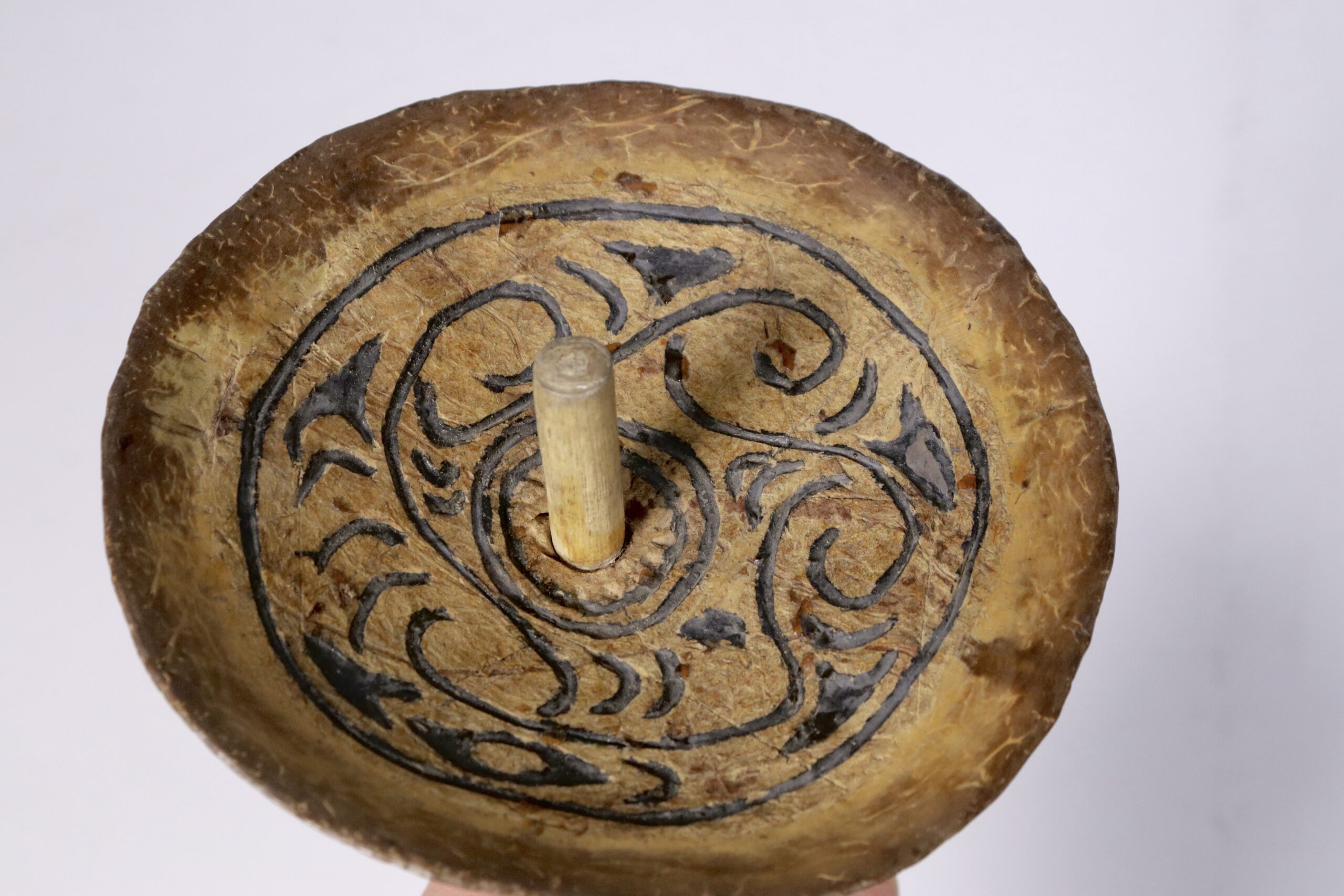
Doing province research on the Spinning Top Coconut Toy reminded me of what originally drew me to both Anthropology and museums. Growing up visiting the Pitt Rivers, the toy section was always by far my favourite. Staring at these objects, I felt a deep shared connection – a moment of realization that despite the vastness of the world, our shared humanity unites us all. We all have an innate desire to play and connect with others, to gather over a meal, to dress up and dance.
Particularly amidst the political and global chaos that has ensued throughout the timeline of this project, this realisation has equally affirmed my belief that we need anthropological collections now more than ever. Even despite their futility and shortcomings, these objects remind us of what unites us all. Now the challenge remains, to create these spaces as places of shared connection and conversation, rather than rebuilding colonial barriers which seek to oppress and divide.